Reims Champagne Facts: 33 Coronations, 1.2 kg of Grapes a Bottle and a Myth
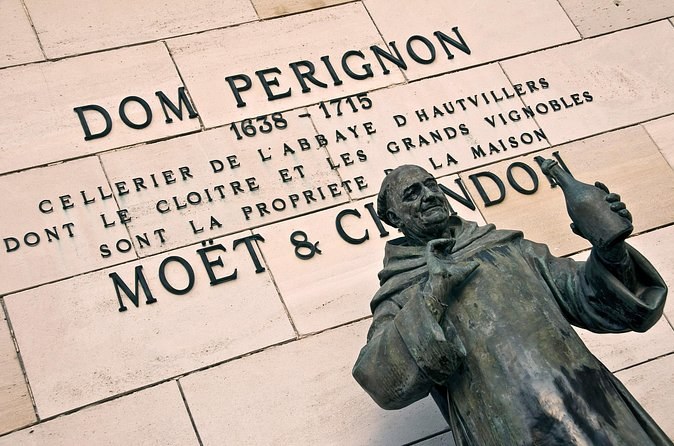
The short answer. Thirty-three kings were crowned in Reims. A bottle of champagne takes about 1.2 kg of grapes and holds 5 to 6 bar of pressure. Brut means under 12 grams of sugar a litre. And Dom Pérignon did not invent champagne: nobody did, says the Comité Champagne.
These are the facts that surprise people on a first visit. Every one comes from the Comité Champagne, the cathedral parish or the houses themselves. Where a house makes a claim about itself, you will see it marked as the house's own. Things to do in Reims Champagne country tells you where to see each place.
1. Thirty-three kings were crowned in Reims
The cathedral parish lists 33 kings of France crowned at Reims. The first was Louis the Pious in 816; the last was Charles X in 1825. From Henri I in 1027, Reims became the coronation cathedral. Charles VII came in 1429. You can walk into the same nave for free, every day from 8:00.
2. The kings' palace is closed until 2027
The Palais du Tau, beside the cathedral, was the archbishop's residence. The kings stayed there, the coronation procession set out from it, and the feast was held in it afterwards. It is closed for works and reopens in 2027 as the Musée des Sacres. Only its temporary bookshop is open for now.
3. Nobody invented champagne
The popular story says Dom Pérignon invented champagne. He did not. The Comité Champagne says plainly that champagne was not invented by anyone. The region was simply the first to try to understand and control the second fermentation. Dom Pérignon was the cellar master of Hautvillers abbey from 1668 until his death in 1715. His tombstone lies in the choir of the Saint-Sindulphe church, which you can visit all year.
4. A bottle takes about 1.2 kg of grapes
That is the Comité Champagne's own figure. Next time you pour a glass, think of a bunch or two of grapes in each flute: a 75 cl bottle fills about six.
5. The pressure is 5 to 6 bar
That is why the cork is wired down, and why the Comité Champagne tells you to open a bottle tilted at 30 to 45 degrees, pointed away from anyone.
6. "Brut" means under 12 grams of sugar a litre
The labels follow a fixed scale. Brut Nature, also called Pas Dosé or Dosage Zéro, is under 3 g. Extra-Brut is 0 to 6 g, Brut under 12 g, Extra-Dry 12 to 17 g, Sec 17 to 32 g, Demi-Sec 32 to 50 g and Doux over 50 g. So "Extra-Dry" is sweeter than "Brut", which surprises most people. Pommery says Madame Pommery created the first brut; that is the house's own claim.
7. Every grape is picked by hand
The rules require whole bunches at the press, so machines cannot pick. Nearly 120,000 seasonal pickers come for the harvest, about four for every hectare. The harvest starts about 90 days after the vines flower, typically in September, on dates set for each village and each grape. When to visit Reims Champagne covers the harvest weeks.
8. Americans drink more of it than anyone abroad
The United States took 26.5 million bottles in 2025, the largest export market. The United Kingdom came second, with 22.7 million.
9. There are 25 km of cellars under one hill
The houses reused chalk quarries, the crayères, to age their wine. Champagne has 370 of them, and 25 km lie beneath Saint-Nicaise hill in Reims. Épernay goes further: 110 km of cellars run under the Avenue de Champagne. Inside the Reims champagne cellars goes house by house.
10. The cellars never change temperature
Down in the chalk it is 10 to 12 °C all year, with 90 to 100% humidity. That is why every house tells you to bring a warm layer, even on a hot day.
11. Non-vintage champagne waits at least 15 months
That is the legal minimum in the cellar. A vintage champagne must wait at least three years.
12. An abbey sold corks by 1737
The Comité Champagne notes that Hautvillers Abbey was trading corks as early as 1737. The village is on most tour days, and you can visit the church where the abbey's cellar master is buried.
13. The map was drawn by law in 1927
A 1927 law set the area where champagne can be made: about 34,000 hectares, in 319 villages. The ranking of villages dates from 1911, and the terms Grand Cru and Premier Cru from a 1952 decree. Today 17 villages are Grand Cru and 42 Premier Cru.
14. A president toured the cellars by carriage
In 1891 Eugène Mercier took President Sadi Carnot through his Épernay cellars in a horse-drawn carriage. A bas-relief by Gustave Navlet records the visit, and you pass it today on the house's driverless train.
15. The towers are 249 steps up
The cathedral's towers are a separate guided climb: 249 steps, EUR 9, booked online. Under-18s go free. The towers open from mid-February to mid-November.
16. Three houses each claim a first
The houses like a first. Pommery credits Madame Pommery with the first brut. Veuve Clicquot tells the story of its invention of blended rosé champagne. Ruinart says it was the first house in Reims to set its cellars in the chalk pits. Each is the house's own claim, and each house tells it on its tour.
17. The hills, houses and cellars are World Heritage
Since 2015 UNESCO has listed "Champagne Hillsides, Houses and Cellars". It covers three places: the old vineyards of Hautvillers, Aÿ and Mareuil-sur-Aÿ; Saint-Nicaise hill in Reims; and the Avenue de Champagne and Fort Chabrol in Épernay.
Where to see each fact
| Fact | Where you see it | Cost |
|---|---|---|
| The coronations | Reims Cathedral nave | Free |
| Dom Pérignon's tombstone | Saint-Sindulphe church, Hautvillers | Free |
| The crayères | A house cellar tour in Reims | From EUR 30 |
| The carriage visit | Mercier, Épernay | From EUR 25 |
| The towers | Reims Cathedral, guided | EUR 9 |
- A tour that stops at the cathedral and Hautvillers covers the first and third facts in one day.
- A house tour covers the cellars, the pressure and the ageing rules.
- A grower's table covers the hand harvest, often from the family that picked it.
The growers' afternoon stops at Hautvillers, and the day from Paris adds Reims Cathedral. Reims Champagne with kids covers the towers and cellars with children.
Days that put the stories in front of you
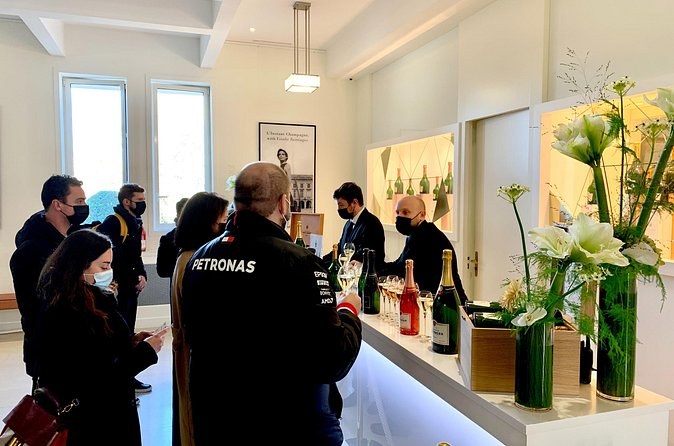
Private Full Day Tour to Champagne from Paris, Visit of 2 Champagne Producers
A private car from your Paris hotel: an hour in Reims, then a big house's chalk cellars and a small family producer, two hours each.
From $848 per person
Check Availability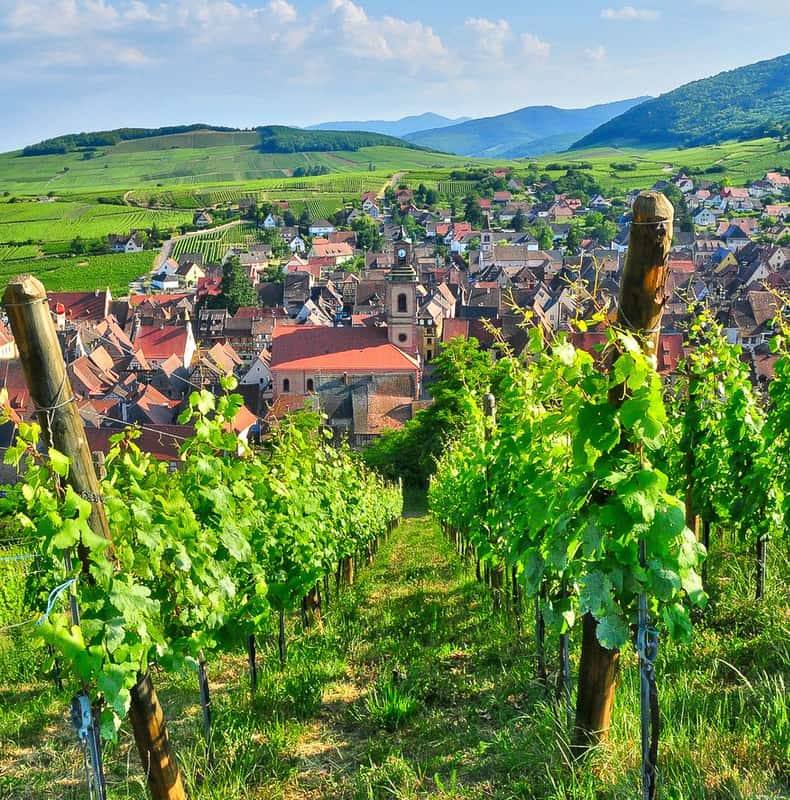
From Paris: Small-Group Champagne Day Trip with Six Tastings
A 7:00 am minibus from Paris for eight at most: the cathedral, a family winery, a big house near Épernay and Hautvillers. Six glasses; lunch is yours.
From $263 per person
Check AvailabilityNext: stand in the cathedral nave and at Dom Pérignon's tombstone on the same day. Every fare sits side by side on Reims Champagne Tours.