Inside the Reims Champagne Cellars, House by House
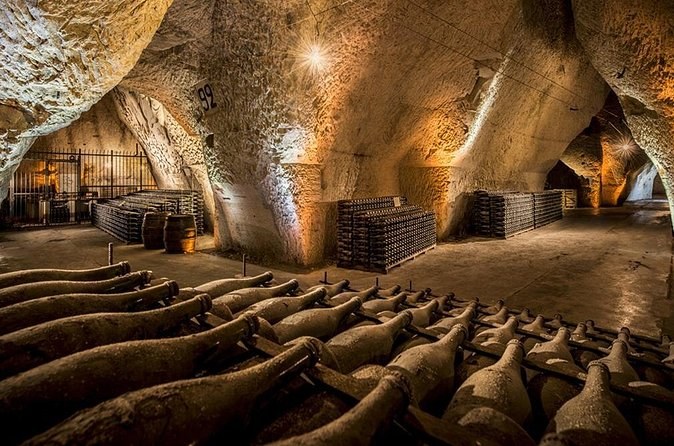
The short answer. Under Reims lie old chalk quarries, the crayères, joined by galleries the houses dug to age their wine. There are 25 km of them under Saint-Nicaise hill alone. They stay at 10 to 12 °C all year. Each house shows you its own, on foot, for an hour to two hours, and each one is different.
Every Reims Champagne tour with a house in it goes underground. What you see down there depends on the house. Some cellars are Gallo-Roman quarries, some are galleries dug over decades, and the depths run from 18 m to about 40 m. Here is what each house shows you, and how to choose between them.
How the cellars came to be
Champagne needs time in the dark. A non-vintage wine must age at least 15 months before it leaves the cellar, a vintage at least three years. The houses found the space they needed in the chalk under the city. They reused old underground quarries, the crayères, and carved galleries between them to store the bottles.
There are 370 crayères in Champagne, and 25 km of them lie beneath Saint-Nicaise hill in Reims. Since 2015 that hill has been part of the UNESCO World Heritage listing "Champagne Hillsides, Houses and Cellars". Down there the air stays at 10 to 12 °C, with 90 to 100% humidity, whatever the season above.
The Reims cellars at a glance
| House | Underground | Visit | From |
|---|---|---|---|
| Ruinart | About 40 m down; some twenty crayères on two levels, 8 km | 2 hours, 12 places | EUR 90 |
| Taittinger | 18 m down; Gallo-Roman chalk quarries | Several tasting visits | Not published |
| Pommery | Crayères and cellars, with an art exhibition | 2 hours | EUR 48 |
| Veuve Clicquot | UNESCO-listed crayères | 1 hour | EUR 36 |
| Mumm | Almost 25 km of tunnels | 1 hour 30 | EUR 30 |
Prices are each house's entry-level visit as of September 2026.
Ruinart: the deepest chalk pits
Ruinart's crayères are about 40 metres below the street: some twenty of them, on two levels, in a labyrinth 8 km long. The house says it was the first in Reims to set its cellars in the chalk pits, in the 18th century. The house describes its pits as immaculately white former chalk quarries.
The visit takes two hours, with a tasting of two cuvées, and costs EUR 90 for an adult or EUR 50 for ages 7 to 17. It takes 12 people at a time, so book early for a summer date. The most important thing not to miss is the scale of a single pit.
Taittinger: an abbey above, Roman quarries below
Taittinger's cellars lie 18 metres down, on the site of the former Saint-Nicaise Abbey. The galleries run into Gallo-Roman chalk quarries, and the remains of the abbey are part of the visit. The house opens for tastings all year and lets you choose between several tasting visits, though it does not publish its prices in advance.
Pommery: cellars as a gallery
Pommery's cellars and crayères are part of the UNESCO listing. The house hangs a contemporary art exhibition in them, so part of your visit is a walk through art as well as bottles. Its "genius of Madame Pommery" tour lasts two hours with two glasses, for EUR 48. The house credits Madame Pommery with the first brut champagne, and it opened the estate to visitors in 1878.
Veuve Clicquot: the crayères and the yellow label
Veuve Clicquot's tours go down into its UNESCO-listed crayères from the visit centre on rue Albert Thomas, 30 minutes on foot from the city centre. The shortest visit is an hour, EUR 36, ending with the Brut Yellow Label. Longer visits add rosé, vintages or La Grande Dame, up to four hours. Strollers and wheelchairs can go down on request.
Mumm: 25 km in the city
Mumm's cellars took 70 years to dig, and the house puts them at 25 km. They hold every Mumm champagne, from the newest to the oldest in the house's history. Tours last an hour and a half, from EUR 30 with one glass. The house asks you to dress warmly, and visitors with reduced mobility can see the first level only.
Lanson: a house off the hill
Not every Reims house sits on Saint-Nicaise hill. Lanson is on the rue de Courlancy, and it calls itself 45 minutes from Paris by TGV. Its visits last about two hours and cost EUR 32, 40, 55 or 85 for an adult, depending on the tasting. Teenagers aged 13 to 17 pay EUR 20 and children aged 7 to 12 EUR 15; under-7s go free. The shop and a tasting need no booking, which helps if you arrive with no slot. Lanson also warns that its cellars are cool, so bring warm clothes and comfortable shoes.
Across the valley: the Épernay cellars
Épernay has its own underground city. There are 110 km of cellars under the Avenue de Champagne alone. Moët & Chandon's run for 28 km. Mercier's, dug in 1871, are 18 km on a single level, 30 metres down, and you ride through them on a driverless train. Both have a lift for wheelchair users. Reims Champagne or Épernay compares the two towns.
What a cellar visit shows you
- Bottles at rest. Stacks of bottles ageing in the dark, sometimes for years.
- Riddling racks. The pupitres, where bottles are turned to gather the sediment before disgorgement.
- The chalk itself. The same chalk holds water for the vines and keeps the cellars cool.
- A tasting. One to three glasses at the end, depending on the visit you book.
Which cellars to choose
If you want depth and chalk, choose Ruinart. For history under your feet, Taittinger. For art, Pommery. For a name you know from the shelf, Veuve Clicquot or Mumm. Two houses in a day is enough; each visit is on foot, with stairs. The Reims champagne houses lists every visit and calendar, and the Reims Champagne map shows where each house sits. If you would rather someone else booked the slots, the Mumm day puts a house's cellars and two growers into one day.
Days that take you into a house's cellars
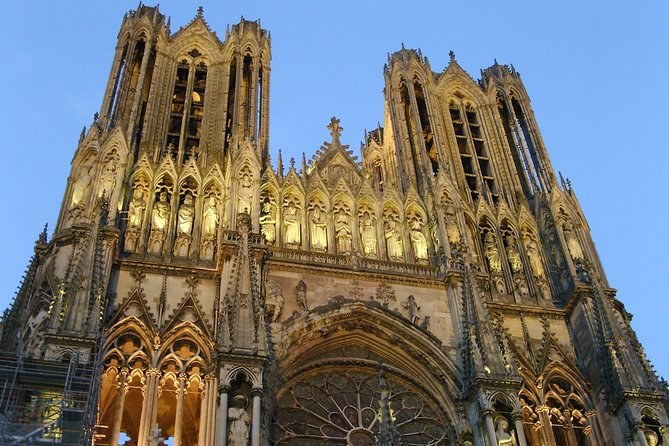
Champagne Private Tour Veuve Clicquot Tasting from Reims Epernay
A private day for your party, collected in Reims or Épernay: the cathedral, the crayères of a famous house when it has a slot, and a family estate's tasting.
From $631 per person
Check Availability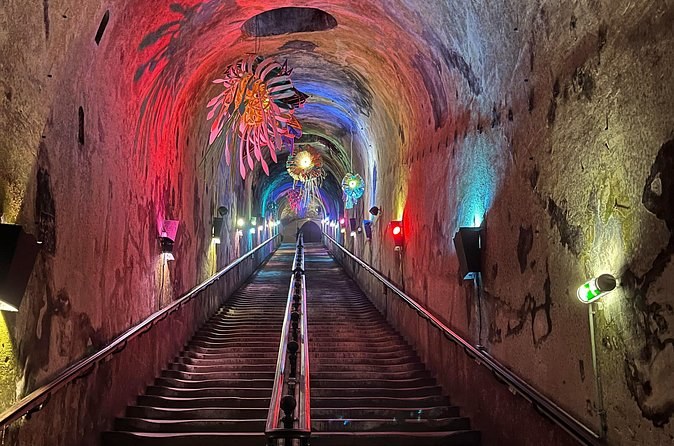
Discovery Tour Reims and Epernay
A shared day from the Reims station square with a big house's cellars first, then Épernay and Hautvillers, lunch in the fare. Seven people at most.
From $321 per person
Check Availability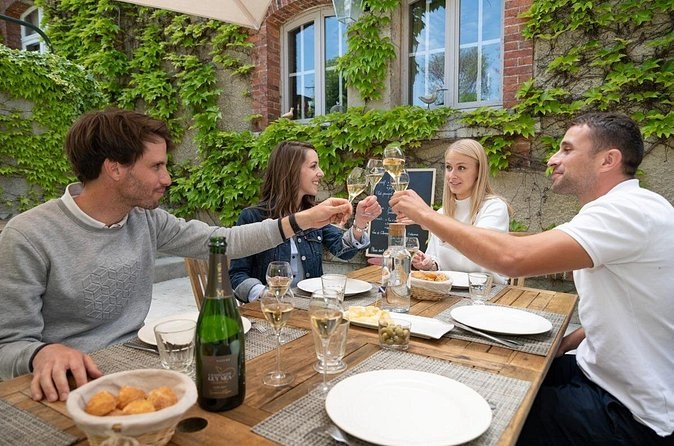
Reims or Epernay: Full day Champagne Mumm, family grower & lunch
A Reims house's cellars with its own guide, then two family producers and lunch at a grower's table. Seven glasses, eight people at most, from the station square.
From $292 per person
Check AvailabilityNext: pick one Reims house for its cellars, then book the day that includes it. Every fare sits side by side on Reims Champagne Tours.