Reims Champagne Harvest Season: What to Expect in September
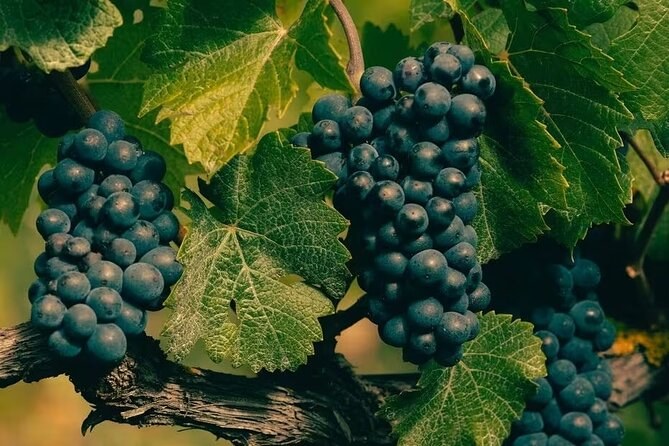
The champagne harvest usually falls in September, and it changes what you see on a visit. The vines are heavy with grapes, pickers work the slopes by hand, and the presses run. This guide explains when the harvest starts and how the dates are set, what you will see, how the houses and tours run in September, and why booking your Reims Champagne tour early matters in harvest season.
When does the harvest start in Champagne?
About 90 days after the vines are in full flower, so typically in September, according to the Comité Champagne. The date depends heavily on the weather, and it moves from year to year.
It also moves from village to village. The start dates are set for each commune and each grape variety, so one slope may be picked a few days before its neighbour. For 2026 the dates were published on 12 August.
How are the harvest dates set?
By measuring the grapes. A ripeness network, set up in 1956, samples clusters twice a week from 600 control plots across the region, starting as the grapes change colour. It measures the rate of colour change, cluster weight, estimated sugar and acidity.
From that data, the Comité Champagne sets the day picking may start in each village and for each variety. The aim is to pick every grape at its peak. The Comité also sets the year's maximum yield per hectare, within the European limit of 15,500 kg.
Why is every grape picked by hand?
Because the law requires the clusters to reach the press whole. Harvesting machines shake the vines, so the grapes fall off the bunch. The only way to pick whole, undamaged clusters is by hand.
So Champagne is one of the few wine regions still harvested entirely by hand. Nearly 120,000 seasonal pickers work the 34,200 hectares of the appellation, in teams of about four per hectare.
The champagne year, from vine to bottle
The harvest is one step in a year of work. Here is the order, as the Comité Champagne describes it.
| Stage | When | What happens |
|---|---|---|
| Winter pruning | Winter | The step the quality of the harvest depends on |
| Spring and summer work | Spring to summer | Debudding, lifting, trellising, then trimming until the harvest |
| Flowering | About 90 days before the harvest | The date the harvest is counted from |
| Ripeness sampling | From véraison, as the grapes colour | Clusters sampled twice a week from 600 plots |
| The harvest | Typically September | Whole clusters picked by hand, village by village |
| Pressing | During the harvest | Whole clusters pressed; 1.2 kg of grapes per bottle |
| First fermentation | After pressing | In tanks, turning the must into still wine |
| Second fermentation | After bottling | In the bottle: the prise de mousse, when the wine becomes sparkling |
| Ageing | At least 15 months | Three years or more for a vintage |
Do tours run during the harvest?
Yes. No listing we sell says it stops for the harvest, and the houses keep their autumn calendars. The difference is at the growers, who pick their own vines: the family may be busy in the vines or at the press.
Two travellers found that worked in their favour. A party of two on ABC Champagne Tour's afternoon, at the end of August 2025, found both winemakers busy with the harvest and watched the grapes being pressed instead. A traveller on the Coutant visit in October 2025 walked vineyards that were partly picked and saw the processing plant.
What will you see in the vines in September?
Rows planted at about 8,000 vines per hectare, and teams of pickers working along them. You will see black grapes and white. Pinot Noir makes up 38 percent of the vineyard, Meunier 30 and Chardonnay 32.
The ABC Champagne Tour afternoon stops in the vines to explain pruning and hand picking. The e-bike afternoon rides about 15 km through the slopes above Mareuil-sur-Aÿ, and the jeep from Épernay drives the vines of Chouilly, Aÿ and Mareuil-sur-Aÿ. Around Hautvillers, the historic vineyards are part of the UNESCO listing.
Which tours put you in the vines at harvest time?
Any day that stops in the vineyards shows you the harvest if your date falls in it. Some spend more time out there than others:
- À La Française's private growers day gives two hours in the vineyards, with lunch at a family winery and a stop at Hautvillers abbey.
- The e-bike afternoon spends two hours riding the slopes, with a 20-minute stop at a viewpoint.
- The jeep from Épernay drives the vines for two hours and a quarter, half an hour in each of four places.
- ABC Champagne Tour's afternoon ends on a vineyard stop where the guide explains the pruning and the hand picking.
- Sparkling Tour's private day stops in the vineyards between its three growers.
The e-bike and the jeep run in the open, so check each listing's weather rule before you book. The Reims Champagne day tours compare every full day that reaches the villages.
What happens at the press?
The whole clusters go straight in, and it takes about 1.2 kg of grapes to make one bottle. The juice, or must, then ferments in tanks to become still wine. Only later, in the bottle, does the second fermentation make it sparkle.
One tour visits a pressing centre whatever the month: BackTrip's day from Paris spends two hours at Pressoria in Aÿ.
Are the houses open during the harvest?
Yes. In September, Veuve Clicquot opens Tuesday to Sunday, from 9:30 am to 5:30 pm. Mumm opens every day until 31 October. Mercier opens every day until 15 November, and Nicolas Feuillatte every day, by booking. Taittinger opens for tastings all year.
Reims Cathedral is free and open every day from 8:00. From 9 September its towers run guided climbs Tuesday to Saturday at 10, 11, 14, 15 and 16 h, and on Sunday afternoons. The Palais du Tau stays closed until 2027.
What should you wear and bring in September?
Dress for two climates in one day. In the vines, a September afternoon is mild; wear shoes with grip for the slopes and the cellar stairs. In the chalk cellars the air stays at 10 to 12 °C all year, so bring a warm layer even on a warm day.
Bring cash or a card if you plan to buy bottles at the end of a tasting. Nobody under 18 is served alcohol, and some tours pour grape juice or soft drinks for children instead.
How early should you book a September tour?
Early, and earlier for weekends. The shared vans take eight people at most, and Ruinart's cellar visit takes 12, so the small groups fill first in harvest season.
Keep the refund rules in mind. Most tours refund in full up to 24 hours ahead, so an early booking costs you nothing if your plans change. À La Française's private growers day is the exception: it cannot be refunded once booked.
What else is on in Reims in September?
- Regalia on the cathedral. A free show of about ten minutes retells a coronation on the west front, at 22:45 on 18 and 19 September and 10 October 2026.
- Veuve Clicquot's harvest lunch. On 19 September 2026, at Verzy: EUR 132, or EUR 72 for ages 3 to 17.
- Mild weather. The average high is 21.1 °C and the low 9.1 °C, with 53.3 mm of rain over about 8 days, at the Comité Champagne's vineyard station near Reims.
The family post covers the age rules if you bring children, and the when-to-visit page sets the whole year out month by month.
What comes after the harvest?
Patience. After the first fermentation, the wines are blended and bottled for the second. A non-vintage champagne then ages at least 15 months in the cellar, and a vintage at least three years. A producer makes a vintage only when the harvest has been outstanding.
So the grapes you watch picked this September will not be poured for well over a year. What you taste instead is the work of earlier harvests, which is part of the story the growers tell.
Frequently asked questions
When is the champagne harvest?
When are the 2026 harvest dates published?
Can visitors pick grapes during the harvest?
What is the weather like in September?
How far ahead should I book?
When is the best time for a Reims Champagne tour?
Is Champagne a UNESCO World Heritage site?
Tours out in the vines at harvest time
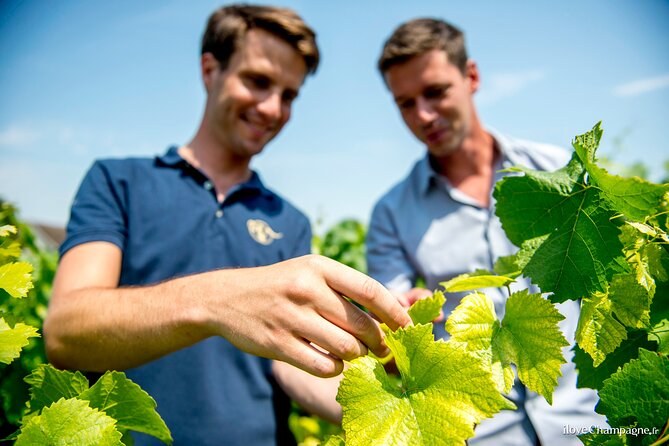
Private Champagne tour, family growers and lunch
Two family wineries and six tastings, Hautvillers, the avenue and lunch, for your party alone, collected within 40 km. The fare cannot be refunded.
From $661 per person
Check Availability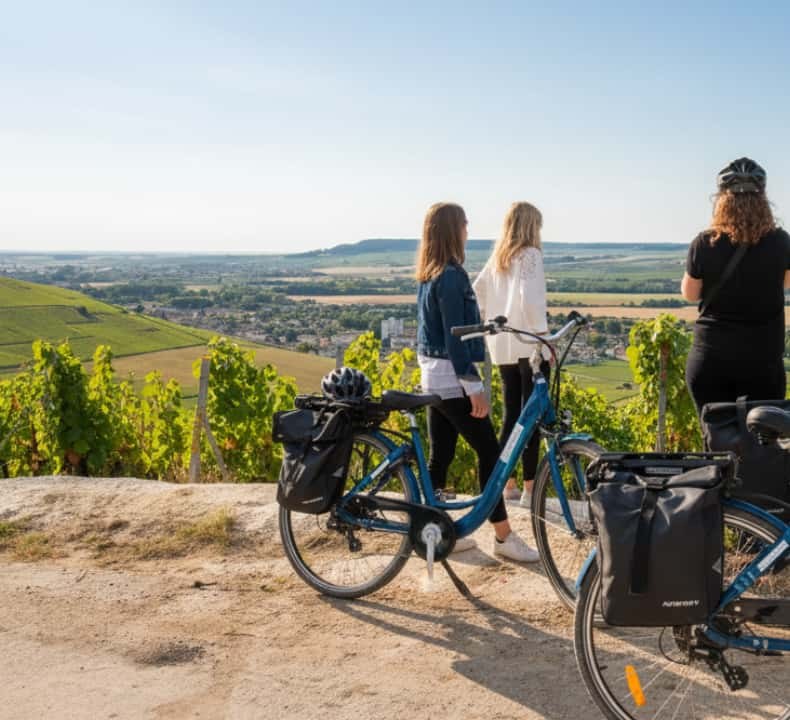
From Reims: Champagne Afternoon E-Bike Tour
About 15 km on an e-bike through the vines above Mareuil-sur-Aÿ, a viewpoint and a cellar with three tastings. Riders must be 16 or over.
From $143 per person
Check Availability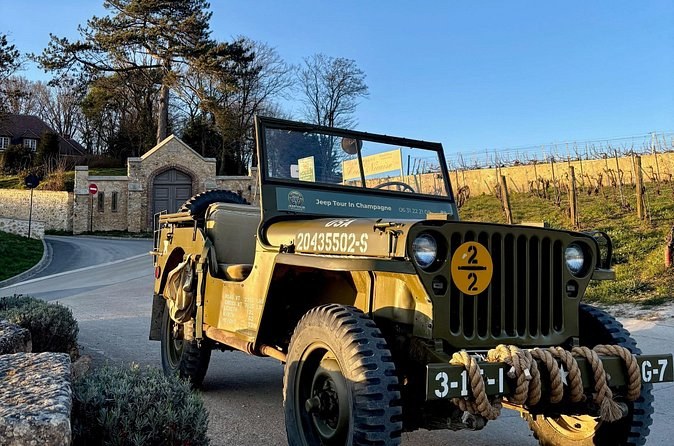
Jeep tour in the Champagne Vineyard with tasting
Two hours by jeep through the vines around Épernay, Aÿ, Chouilly and Mareuil-sur-Aÿ, ending with champagne in the vines. One fare covers up to three.
From $234 per group, up to 3
Check AvailabilityNext: pick a September date, then compare every fare side by side on Reims Champagne Tours.